
Full Shelf, Empty Listing: The Digital Shelf Gap Almost No One Audits
John · July 29, 2026
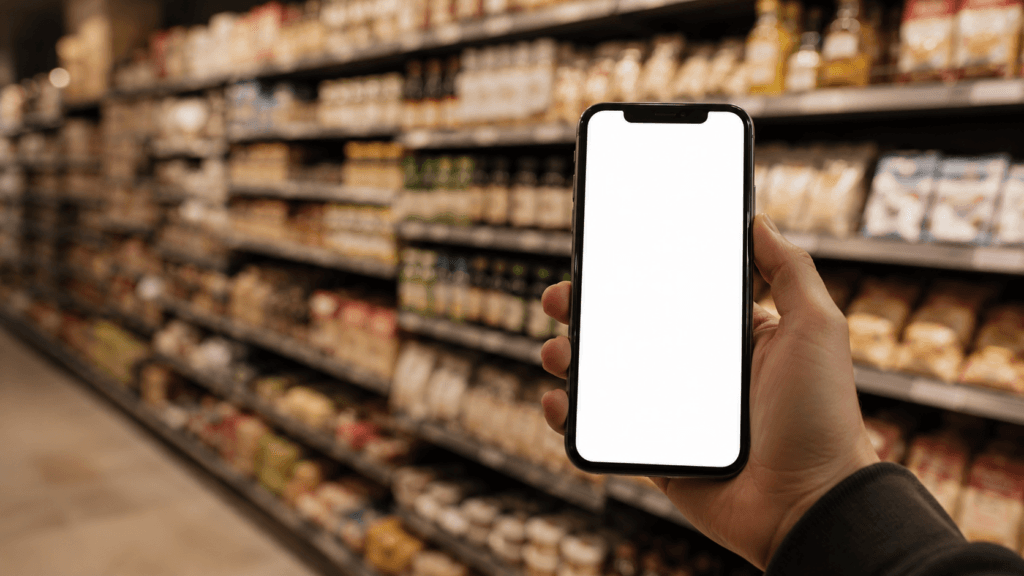
Walk the aisle of any retailer that carries your product, and the shelf tells one story: fully stocked, good facing, maybe even a secondary display. Then go home, pull up that same retailer’s website, and search for your product by name.
For a large number of CPG brands, nothing comes up. Or something comes up, but it’s a bare-bones listing with one photo, no reviews, and a button that says “check availability” — for a product that’s sitting on the shelf twenty feet from where the shopper is standing right now.
This is the gap almost nobody audits, because it doesn’t look like a marketing problem. It looks like someone else’s job.
Table of Contents
Ghost revenue lives here first
The easiest way to think about this: your retail revenue proves the demand exists. People are buying this product, in this store, right now. The question the Digital Shelf answers is simple — when that same shopper, or someone influenced by them, goes looking for the product online at that retailer, does anything meet them there?
If the answer is “no listing,” “incomplete listing,” or “listing says out of stock while the physical shelf is full,” that’s demand the brand already earned at retail, disappearing the moment it goes digital. It’s not a hypothetical loss. It’s revenue the brand’s own retail performance already justified, that simply isn’t being captured anywhere.
Why this is the module almost no one else runs
Most agencies audit Amazon obsessively, because Amazon has the tools to make it easy — clear buy box data, visible reviews, price history. Retailer.com listings (Walmart.com, Target.com, Kroger, Instacart, and the rest) don’t get the same attention, because there’s no single dashboard for it. Someone has to actually go retailer by retailer, door by door, and check.
That’s exactly why it’s the highest-credibility finding a brand can get handed back to them. It’s not a benchmark pulled from an industry report. It’s their own listing, on their own retailer’s site, right now, compared to what their shelf presence should justify.
What the gap actually looks like, retailer by retailer
A few patterns show up constantly once someone actually checks:
- The listing doesn’t exist at all, despite the product being carried in hundreds of that retailer’s doors.
- Content is incomplete — one low-resolution image, no enhanced content, no specs, next to a competitor’s listing with lifestyle photography, video, and full brand storytelling.
- Review count is near zero, while comparable products at the same retailer carry hundreds, because nobody set up review syndication from the brand’s other channels.
- The listing shows out of stock or “check in-store,” actively discouraging the exact online-to-store or delivery conversion the retailer’s own platform is built to support.
- The brand is simply absent from delivery/pickup platforms like Instacart, even though it’s a grocery staple sitting on shelf every week.
Each of these, on its own, looks minor. Multiplied across every door and every retailer where the brand has real shelf presence, it adds up to a number most finance teams have never seen quantified.
How to check your own
You don’t need special access to start:
- List every retailer where you hold meaningful shelf presence.
- Search your product by name on each retailer’s own website.
- Score what you find: does a listing exist, is the content complete, are there reviews, does it show accurate availability.
- Check whether you’re listed on that retailer’s delivery/pickup platform, if one exists.
The pattern usually repeats across retailers, which is itself the finding — a systemic gap, not a one-off oversight at a single account.
This is precisely the module most diagnostics skip and ours treats as central, because for a brand built on retail shelf presence, it’s often where the largest single recoverable number is hiding — not in a channel nobody’s heard of, but in the digital shelf of the very retailers already selling the product.
Find Your Ecommerce Gap and see what your own shelf looks like on the other side of the screen.

John